The Coon

Description
The coon, short for raccoon, caricature is characterized as being lazy, inarticulate, and idle and is someone who is unable to accomplish any goals they want. They were considered to be dimwitted and disloyal, incapable of obeying or accomplishing his master’s goals. These attributes were typically attributed to young black males instead of older ones.
Brief History
The coon caricature was born during the age of American slavery as a result of the natural conflicts between a white master and a black slave. From the Jim Crow Museum, “…the master desired to obtain from the enslaved the greatest labor, by any means; the enslaved desired to do the least labor while avoiding punishment.” For the black slave, there was no motivation to do work beyond the bare minimums to avoid punishment, and as such, white slave owners developed the perception of slaves being naturally dimwitted and lazy. Through this narrative, white slave owners could justify the punishment and whippings of black people as a form of discipline and education that would make the lazy black people into diligent, hard-working laborers.
This narrative was applied to all black males during slavery, but after slavery, the coon was ascribed typically to young, black men. This association with the coon caricature to the young, black man was a result of white nostalgia for the time of legal slavery. They wished for the time when black men were able to be easily worked to near death on the fields and obedient to them. Thus, the new, born free black men were undesirable as they showed more disdain and disrespect towards the supposedly superior white man. By showing young, black men as lazy and incompetent, a power structure was constructed in which black men were seen as foolish and uneducated and thus needed the help of others to uplift him from his poor position in society. Who better to uplift him than the educated white man, and that only the educated deserved the higher-paying jobs than the foolish and incapable coon. This persistent attribution of a lazy and idle black man would continue to be described to them, ongoing into the modern day.
Ongoing Legacy and Contemporary Depiction
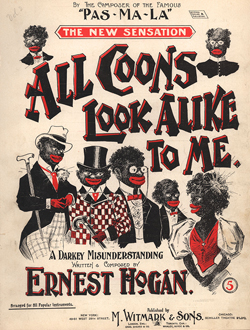
While there have been leaps of progress in the treatment of African Americans in the ongoing decades, the characteristics of being lazy and incapable still persist to this day. According to a study reported by the Jim Crow Museum, “An early 1990s study conducted by the National Opinion Research Center found that the majority of the white, Hispanic, and other non-black respondents displayed negative attitudes towards black people. For example, 78 percent said that black people were more likely than white people to ‘prefer to live off welfare’ and ‘less likely to prefer to be self-supporting.’” Thus, among the wider society at large, a majority of people still consider African Americans to be indolent, and this indicates a problem of normalization. This perception of African Americans being the primary and willing recipients of welfare has become normal in the eyes of the public; it is a natural personality trait of African Americans in their eyes. This type of view thus negatively impacts any opportunities African Americans might have in uplifting their lives. These opportunities would therefore go to other “races” and thus a racial project is born. With the perpetuation of the coon caricature and the reinforcement of the lazy stereotype, a line has been drawn between African Americans and whites, one where African Americans have a lower social and economic standing than that of whites.
 African American Caricatures